One story.
Eighteen looks.
2,124 prompts across 59 brand-new story topics — every one written in 36 angles, including 18 art styles that exist in no other package. Manga, watercolour, pixel art, paper-cut, claymation, neon, stained glass and eleven more, each spelled out as a full art-direction brief the model can actually follow.
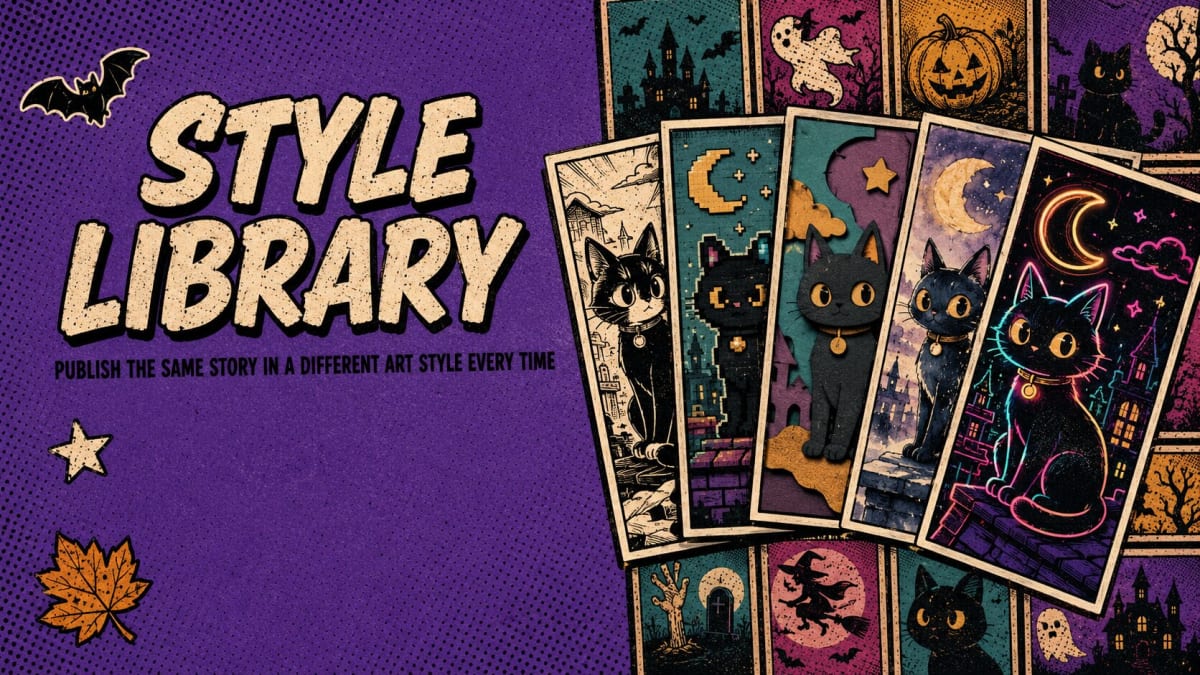
One cat. Five cards. Five completely different looks — that is the whole idea of this package.
Added to the order you just placed · Same two-file delivery · Nothing to install
Works with the same free ChatGPT account — no paid plan required
One book. Eight covers.
Every cover below is the same story from this library — The Substitute Teacher Who Might Be a Vampire — run through eight of its art-style prompts. Same plot, same characters, same classroom. Nothing drawn by hand, nothing edited afterwards.

One title. Eight finished books. Eight different shelves — from one story you only had to write once.
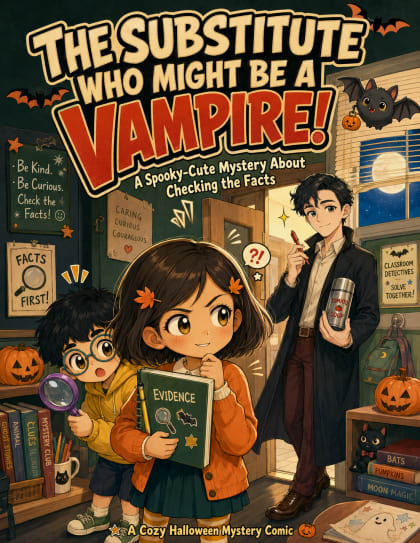 Manga
Manga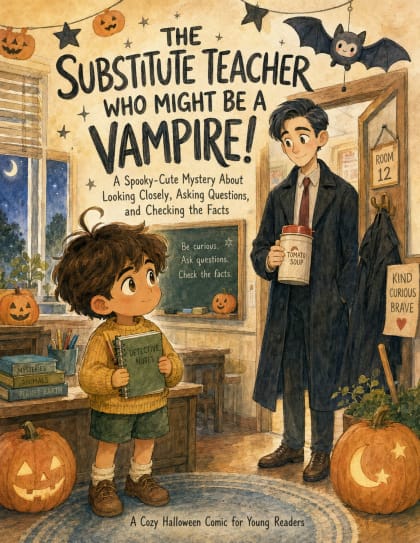 Watercolour
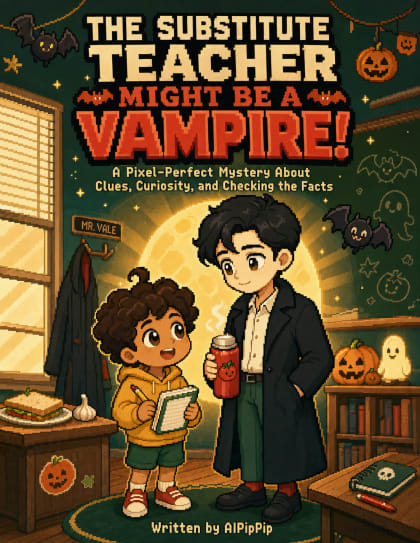 Pixel Art
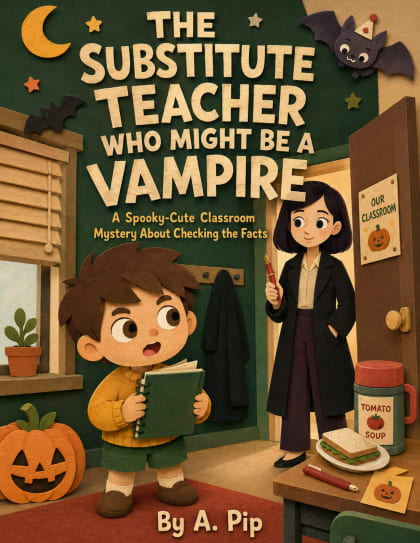 Paper-Cut
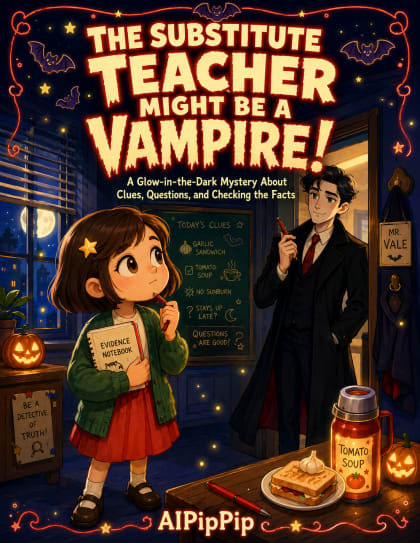 Neon Night
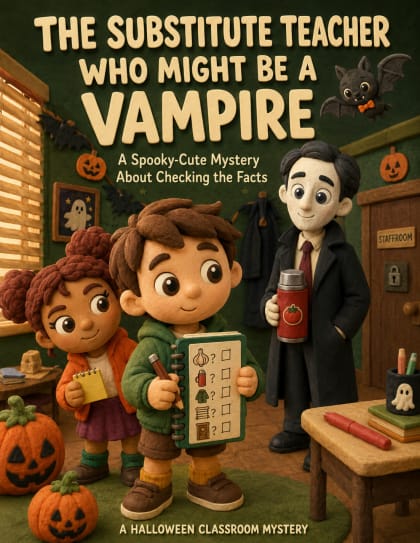 Claymation
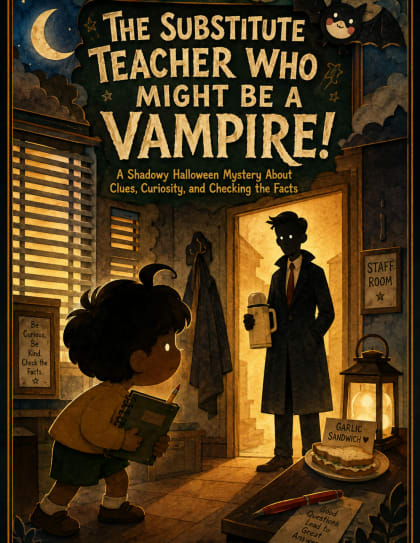 Silhouette
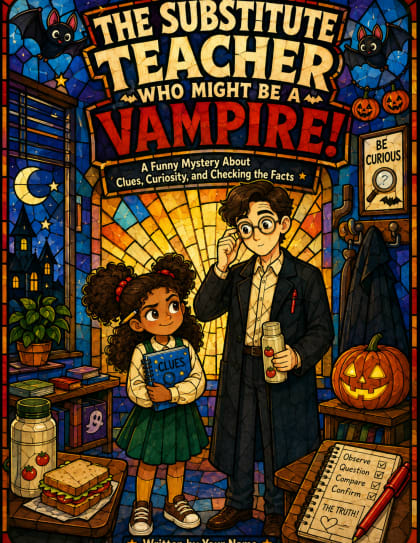 Stained Glass
Eight of the eighteen styles are shown here. Your books will not look identical to these — the model never draws the same page twice — but the style direction is what stays fixed.
One click adds it to the order you just placed. No second checkout.
Nobody browsing a shop
reads your story first
They see a thumbnail. In that half second, the art style is the entire message — and it decides whether the book is even opened.
Your books all look the same
Left to itself, an image model settles into one comfortable house style, and every book you make starts looking like the last one. A shelf of near-identical thumbnails reads as one product, not a catalogue — and a returning buyer has no reason to buy the second one.
One look reaches one buyer
The parent who loves soft watercolour will never buy your neon pixel-art book, and the ten-year-old who wants manga will not touch the pastel one. Same story, different look, completely different customer — that is a second sale from work you have already done.
"Draw it in manga style" does not work
Two words of direction give you a vague imitation that drifts by page five. A style holds only when the prompt fixes line weight, shading method, panel shapes, lettering and palette — and repeats that spec on every page. That is exactly what these 2,124 prompts do.
The 18 art styles
Not style names dropped into a prompt — full art direction. Each one specifies the linework, the shading, the panel construction, the lettering and the palette, and repeats it inside every page prompt so the book holds together from cover to last page.
Clean confident ink line art, large expressive eyes, screentone shading, dynamic diagonal panels, speed lines, and chibi reaction insets for the comedy beats.
Fine cross-hatched linework, muted aged-paper tones, ornamental panel frames with corner flourishes, decorative drop-caps and elegant serif lettering — charming, never grim.
Flat layered paper shapes with visible cut edges, soft drop shadows between the layers, subtle paper grain, and no outlines anywhere.
Two heads tall, huge sparkling eyes, tiny hands, thick soft outlines, blushed cheeks and rounded panel corners — even the monsters come out adorable.
Rounded modelling-clay surfaces with fingerprint texture, soft studio lighting, shallow depth of field, and handcrafted felt-and-cardboard miniature sets.
Exactly four equal panels per page, each strip carrying its own setup, build, twist and punchline while still moving the bigger story forward.
Waxy crayon strokes, chalky colour blocks, slightly wobbly hand-drawn panel borders and lightly textured paper — charmingly imperfect, still perfectly readable.
Torn paper edges, painted paper textures, snippets of burlap and woven fabric, and stitched detail lines, with every character readable in silhouette.
Bold simplified shapes, rubber-hose limbs, a deliberately limited flat palette, halftone dots and the charm of slightly off-register printing.
Translucent washes, blooming edges where colours meet, pencil underdrawing showing through, and borderless panels floating on white with hand-lettered captions.
Solid silhouettes against glowing backgrounds, every character known by outline alone, warm lantern backlight, and pinpricks of light for eyes so nobody looks menacing.
Thick black leading lines around every shape, flat jewel-toned panes with a faint glass glow, symmetrical composition, and radiating light behind the key moments.
Chunky pixels on a fixed grid, a limited retro palette, game camera angles, pixel-font dialogue boxes, and little game icons like hearts and keys.
Repeating folk patterns on clothing and borders, stylised figures, flat matte colour with fine white linework, and symmetrical decorative frames.
Deep dark backgrounds with luminous glowing outlines, light spilling from lanterns, candles and fireflies, and soft coloured halos around every light source.
Layered paper stage sets with foreground, middle and background planes, visible fold lines and tabs, and cast shadows between the layers.
Clean black ink on white with exactly one accent colour through the whole book, used to steer the eye to the most important thing in every panel.
Thick uniform outlines with a white sticker border around every element, flat cheerful colour, and tiny doodles filling the gutters — prints beautifully as stickers too.
This is not an 18-prompt style pack
All 18 styles are written out in full for each of the 59 story topics, alongside the 18 story angles — so you never have to graft a style onto a prompt yourself, and the art direction is already woven into that particular story's characters, props and palette.
One click adds it to the order you just placed. No second checkout.
One topic. Thirty-six
finished prompts.
This is that same story topic opened inside the library. Prompt 19 is manga, 20 is vintage gothic, 21 is paper-cut, 22 is chibi — the covers you just looked at came out of these exact prompts, and each one is a complete blueprint with its own Copy button.
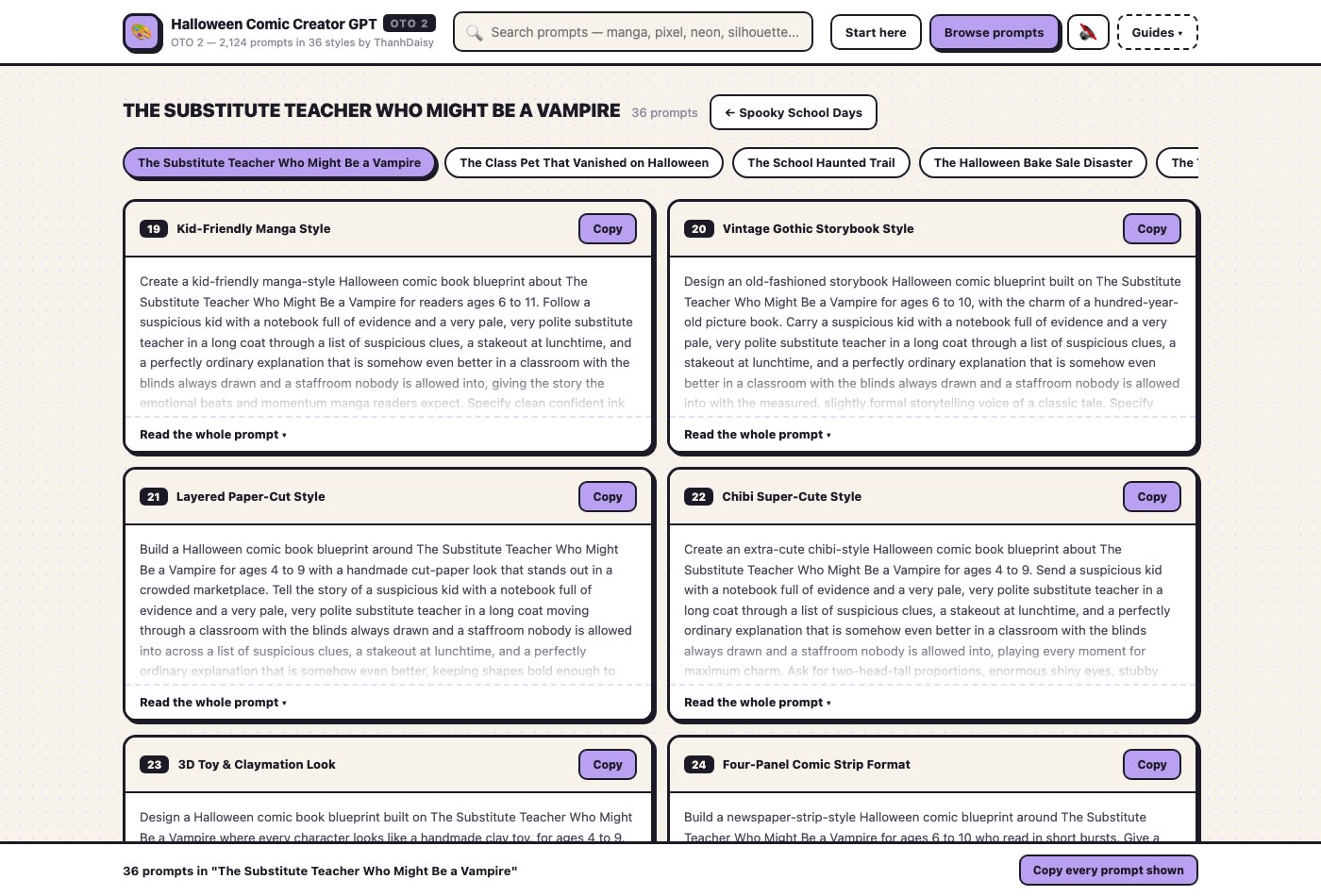
Four pages from the same comic
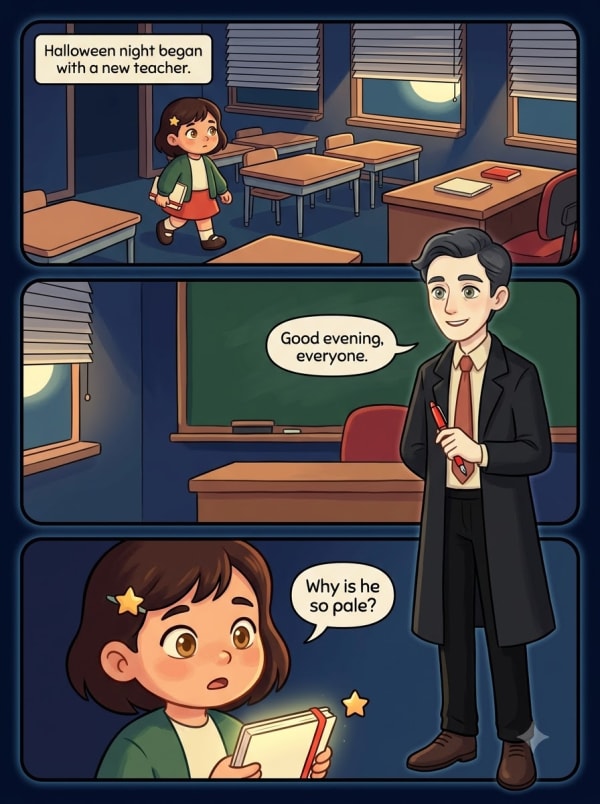
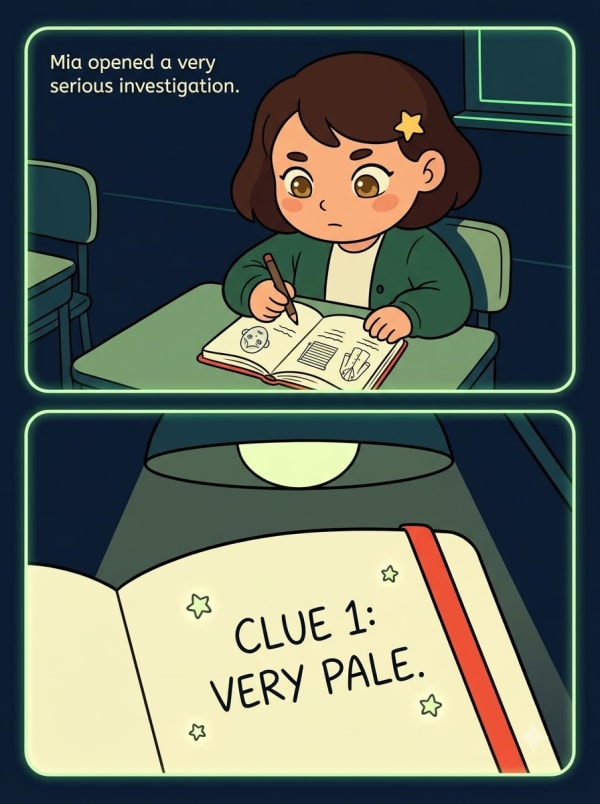
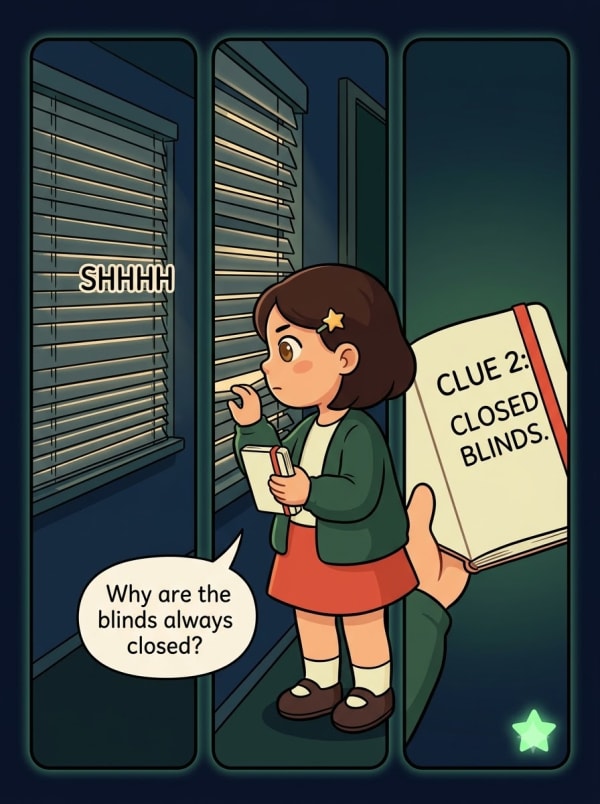
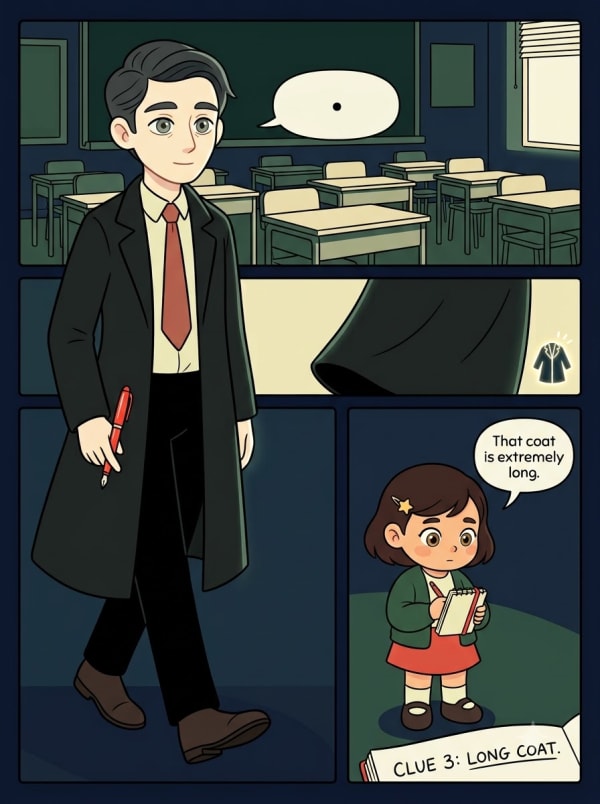
A cover is the easy part. These are consecutive interior pages of that same book, generated one prompt at a time — and the girl, the teacher, the classroom and the style are still the same on every one.
The girl does not change
Same bob, same star hairclip, same green cardigan and red skirt, page after page — because her Consistency Tag is repeated word for word inside every page prompt.
The lettering is drawn in
Caption boxes, speech bubbles and the sound effect are part of the artwork, not typed over it afterwards, because the exact words sit inside the prompt.
The panels keep changing
Three stacked panels, then two, then a tall vertical trio, then a mixed grid — the pacing varies while the look stays locked.
59 topics. 36 angles. No filler.
Every story topic is written out in all 36 angles — the 18 story angles and the 18 art styles — so one idea becomes thirty-six genuinely different books.
Each prompt still returns the whole blueprint you already know: title, age range, description, 7 keywords, story overview, character design sheet with locked consistency tags, style guide, page structure, cover prompt, and a ready-to-copy image prompt for every page with the dialogue and sound effects written inside it.
All 59 new topics, listed
No mystery box. These are brand-new stories too — not the ones you already own, restyled. Read the whole contents before you decide.
- The Substitute Teacher Who Might Be a Vampire
- The Class Pet That Vanished on Halloween
- The School Haunted Trail
- The Halloween Bake Sale Disaster
- The Talent Show Trick That Actually Worked
- The Library Book 100 Years Overdue
- The Worm Who Wanted a Costume
- The Snail Who Was Late for Everything
- The Beetle Band's Halloween Concert
- The Mouse Who Lived in the Jack-o'-Lantern
- The Hermit Crab Who Changed Shells for Halloween
- The Ladybug Who Lost Her Spots
- The Little Sea Monster of Foggy Bay
- The Pirate Ghost and the Buried Candy
- The Mermaid's Halloween Above Water
- The Octopus Who Wore Eight Costumes
- The Sunken Ship Sleepover
- The Foghorn Who Lost His Voice
- The Night of the First Frost
- The Apple Cider Stand
- The Leaf Pile Kingdom
- The Last Firefly of the Year
- The Chestnut Roasters
- The Woolly Hat That Blew Away
- The Kid Who Handed Out the Candy
- The Little Sign Maker
- The Costume Repair Kit Kid
- The Kid Who Walked the Neighbour's Dog
- The Lantern Lighter
- The Clean-Up Crew
- The Candy-Sorting Machine
- The Homemade Ghost Detector
- The Great Pumpkin Catapult
- The Costume Made of Recycled Junk
- The Spooky Sound Machine
- The Doorbell That Rang Itself
- The Gingerbread Ghost
- The Little Troll Under the Garden Bridge
- The Fairy Who Was Afraid of Pumpkins
- The Goblin Market Stall
- The Gnome Who Guarded the Pumpkin Patch
- The Costume Post Office
- The River Lantern Festival
- The Marigold Path Home
- The Turnip Lantern
- The Village Bonfire Night
- The Mask Maker's Workshop
- The Harvest Moon Picnic
- The Halloween Fun Run
- The Haunted Bike Race
- The Pumpkin Bowling Tournament
- The Costume Relay Race
- The Halloween Scavenger Hunt
- The Treehouse Halloween Club
- The Monster Who Collected Bad Dreams
- Blanket Fort Ghost Stories
- The Kid Who Missed Halloween
- The Goodbye Costume
- The Quietest House on Halloween
2,124 prompts · 59 topics · 18 art styles · two files, instant access
Same library. Same buttons.
Ten new collections inside.
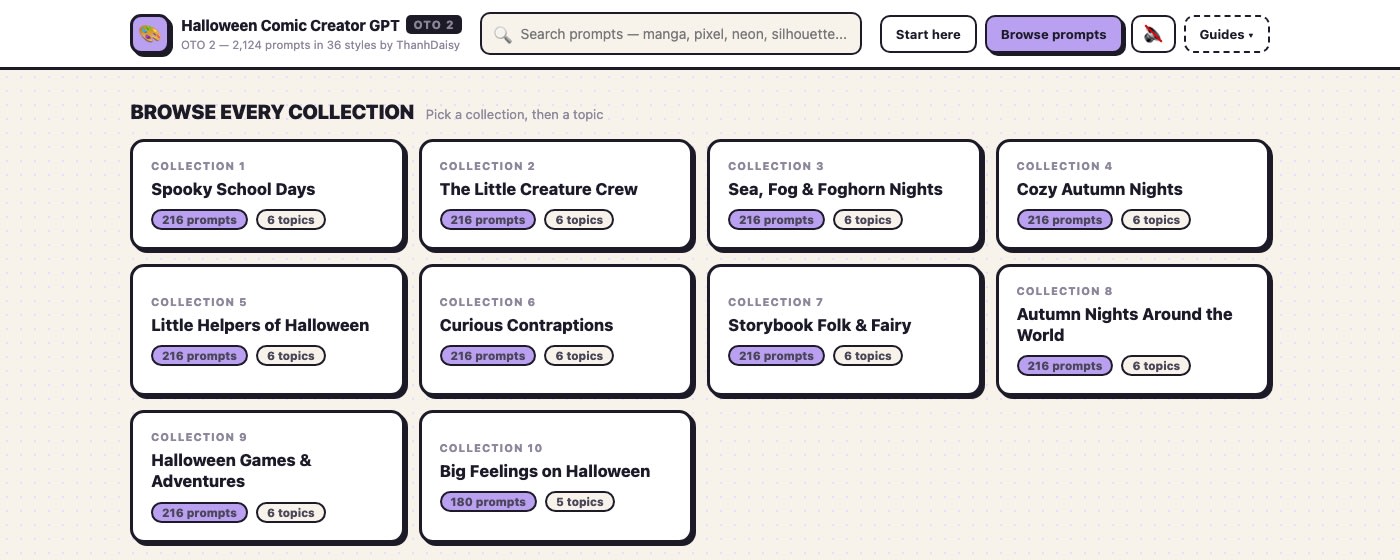
It arrives as its own self-contained page that looks and works exactly like the one you already have — browse by collection, pick a topic, copy a prompt. Search "manga" or "neon" and every style prompt in the library comes back at once.

Zero overlap. Verified line by line.
Every prompt in this library was compared against the packages that come before it — category names, angle labels and the full prompt bodies.
59 new topics
Not one story topic here appears in any other package. New characters, new settings, new lessons.
18 styles, exclusive
The 18 art styles exist only in this library. No other tier contains a single one of them.
2,124 unique bodies
Every prompt is written out in full, in its own words. No cross-references, no "see the other file".
This is an add-on, not a re-release. Whatever you already own, everything on this page is new to you.
Two files, added to the same order
The library page
One self-contained web page holding all 2,124 prompts with search, copy buttons and all three guides built in — Publishing Best Practices with its tickable pre-publish checklist, the Character Consistency Cheat Sheet, and the Desktop Agent Guide. No install, no login, works offline.
The spreadsheet
The same 2,124 prompts as an .xlsx, one prompt per row, with its collection, story topic and style angle in their own columns — so you can filter to a single art style, plan a whole styled series and tick off what you have published.
Free ChatGPT is enough
A normal free account runs these prompts, including the built-in image generation. A paid plan only means fewer waits on daily image limits.
Works with what you own
Same eleven-section blueprint, same locked consistency tags. Any studio tools and guides from your earlier purchase apply to books built from these prompts too.
Sell what you make
Every comic you create is yours to publish and sell on KDP, Etsy, Gumroad or anywhere else, with no royalties claimed. The library itself stays personal-use.
With it, and without it
| What changes | Without the Style Library | With it |
|---|---|---|
| Art styles available | Whatever the model defaults to | 18, each fully specified |
| Books from one story idea | Up to 18 angles | 36 angles & styles |
| New story topics | — | 59, in 10 collections |
| Style holds across 32 pages | Drifts without a written spec | Spec repeated in every page prompt |
| Reaching a second buyer type | Same look, same shelf | Restyle and relist |
| Manga · pixel · neon · watercolour | Not included | Included |
| Paper-cut · claymation · stained glass | Not included | Included |
| Price to get here later | — | Only on this page |
Quick answers
Is this just my old prompts with a style added on?
Can't I just type "in watercolour style" myself?
Do I need the earlier packages to use this?
Do I need a paid ChatGPT plan?
Will every style look good every time?
How is it delivered?
Can I sell the comics I make with it?
Can I add it later instead?
What is the refund policy?
Everything you add for $47
- 2,124 prompts — 59 story topics crossed with 36 angles
- 18 art styles found in no other pack: manga, watercolour, stained glass, papercut, neon, claymation
- Publish the same story in a different look every time
- Nothing repeated from anything you already own
- Two files, added to the same order. Nothing to install
2,124 prompts · 59 topics · 18 exclusive art styles · two files, yours to keep
Either way, your library is waiting. Click No Thanks and you go straight to your download — there is nothing else to buy after this page.